
The government has reached out to investors to apprise them about Life Insurance Corporation of India's (LIC's) growth and prospects as it prepares for the country's largest initial public offering (IPO). Preliminary presentations have been made to inform investors on how the organisation is being restructured ahead of the IPO, along with its financials, so that the IPO process can be hastened once its embedded value is derived. "A detailed presentation has been made to investors, giving them details on how LIC is positioned beyond what is known. "This includes how LIC is being restructured ahead of the IPO, and investors are keen to know that," said an official. In the Finance Bill, 2021, the government had proposed a slew of changes to the LIC Act, 1956.

In recent months, three companies - PC Jeweller, Vakrangee and Kwality - decided to withdraw their share buyback proposals

'Expectations are high regarding the change in LTCG with respect to equity investments.'

With a potential liability of Rs 750-800 crore, sources say Clix Capital's stand on the matter would be crucial in finalising the merger valuation.

2017 saw the highest-ever mobilisation by way of IPOs of close to Rs 700 billion. The momentum is expected to continue this year as well.

As the political uncertainty settles down, investors are reviewing their assumptions about the power sector. Demand here is likely to continue to grow strongly in the long-term at around 5-6 per cent CAGR (compounded annual growth rate) during the next 6-7 years. Given policy continuity, several trends will persist.

Karnataka high court on Wednesday refused to stay an emergency shareholder meeting called by select investors of Think and Learn Pvt Ltd -- the owner of Byju's -- to oust the company's Founder and CEO Byju Raveendran and his family from the leadership in the edtech firm. Byju's had approached the Karnataka HC seeking a stay on the EGM but the court only gave an interim relief that any resolution passed at the EGM on Friday cannot be implemented before the next court hearing. "It is further submitted that the conditions for convening the Extraordinary General Meeting (EGM) are not complied and no notice is issued as contemplated under Section 100 (3) of the Companies Act 2013," the court order said.

The Securities and Exchange Board of India (Sebi) is contemplating the implementation of a same-day settlement cycle, known as T+0, in two phases. This is seen as a preliminary step towards instantaneous settlement. The shorter T+0 settlement cycle is being considered for the equity cash segment as an optional mechanism, in addition to the current T+1 (Trade plus one day) cycle.

Reliance Industries closed more than half a per cent higher after the company announced a proposed merger of media and entertainment assets of Viacom18 with Star India. Hindustan Unilever, Bharti Airtel, Tata Motors, ITC, Tech Mahindra and Axis Bank were among the laggards.

Exchanges will have to facilitate a more direct interface between clients and the clearing corporation, bypassing intermediaries such as brokers, under this new proposed framework.

rediffGURU T S Khurana answers readers' personal income tax queries.

'What has happened at Byju's is no surprise to anyone.'

From the Sensex basket, Tata Motors, State Bank of India, Tata Steel, Power Grid, NTPC, Bajaj Finserv, Bajaj Finance and Asian Paints were the major laggards.

There are a number of steps taken that will leave more money in the hands of the taxpayers.
These include the reduction in tax rates under the new tax regime, increase in standard deduction, allowing tax collected at source to be adjusted against tax deducted at source from salaries, notes Harsh Roongta.

Sebi also allowed foreign investors to own up to 15 per cent stake in domestic stock and commodity exchanges

Sebi on Friday barred fugitive businessman Vijay Mallya from the securities markets and restrained him from associating with any listed firm for three years in the matter of routing of funds to the Indian securities market using overseas bank accounts with UBS AG. The Indian government has been attempting to extradite Mallya from the United Kingdom to face fraud charges related to his now-defunct company Kingfisher Airlines. Mallya has been living in the United Kingdom since March 2016.

Raising equity exposure to 50 per cent in the National Pension Scheme will benefit young investors, provided they can stomach higher volatility.

sharper-than-expected economic recovery back home, analysts say, can fuel a further rally in domestic cyclicals, industrials, and financials as global central banks continue with their easy money policy.

The Adani group, buoyed by a sharp recovery in its share prices over the past year, is set to embark on a series of roadshows this week to raise up to $4 billion (approximately Rs 33,254 crore) through equity and refinancing of older debt, according to banking sources. The roadshows, scheduled to take place in major cities, will inform investors about the group's investment plans across renewable energy, petrochemicals, and infrastructure development.

'When the bombing happened in the Taj Mahal hotel in 2008, that was a very sad moment, but he really took care of the people, took care of everybody and that was when you saw some of his best moments.' 'There are some things which we will never forget. That is when the best of a person comes out.'

Tata Steel was the top gainer in the Sensex pack, zooming 7.57 per cent, followed by Sun Pharma, IndusInd Bank, L&T, ITC and HCL Tech.

Asia Securities Industry & Financial Markets Association (Asifma) has raised concerns about the Securities and Exchange Board of India (Sebi) proposal to introduce a T+0 settlement cycle. The industry association of top foreign portfolio investors (FPIs) has stated that this move could give rise to several issues, including the bifurcation of the market, liquidity fragmentation, and deterioration of market quality. In a discussion paper floated last month, Sebi has proposed a separate same-day settlement cycle that will run parallel to the existing T+1 cycle, where trades are settled the next day.

The possible instances of front running at Quant Mutual Fund have likely pushed the Securities and Exchange Board of India (Sebi) to expedite the implementation of an institutional mechanism framework designed to curb such market abuses. This framework, approved by the Sebi board in April, was slated to take effect six months after its notification. But, recent developments have set the wheels of regulation turning faster.

From March 3, investors in India will be able to trade in select US stocks through the NSE International Exchange (NSE IFSC), a wholly owned subsidiary of the National Stock Exchange (NSE). Investors can invest in NSE IFSC receipts on US stocks, which will be in the form of unsponsored depository receipts (DRs). For a start, this will include DRs of 50 US stocks such as Apple, Alphabet, Amazon, Tesla, Microsoft, Morgan Stanley, Nike, P&G, Coca-Cola, and Exxon Mobil. Indian retail investors will be able to transact on the NSE IFSC platform under the Liberalised Remittance Scheme (LRS) limits prescribed by the Reserve Bank of India (RBI), which currently stand at $250,000 per year.

Former West Bengal chief minister and a front-ranking Marxist leader Buddhadeb Bhattacharjee will go down in the country's history as a pragmatic communist who kept aside his ideological convictions to woo capital for the industrialisation of his state.

Stock markets will be driven by quarterly earnings by index majors, global trends and the RBI's interest rate decision this week after digesting news on budget proposals and US Federal policy outcome, say analysts. The trading activity of foreign investors and the movement of global oil benchmark Brent crude would also dictate trends in equities. "On the domestic front, the MPC (Monetary Policy Committee) meeting is scheduled from February 6-8.
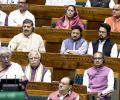
Finance Minister Nirmala Sitharaman on Tuesday announced income tax relief for the middle class, a Rs 2 lakh crore outlay for job creation schemes over the next five years and a spending splurge for states run by her party's new coalition partners as she unveiled the Modi 3.0 government's first budget after the general elections.
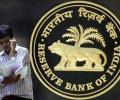
The Reserve Bank of India (RBI) has recognised the Fintech Association for Consumer Empowerment (FACE) as a self-regulatory organisation (SRO) in the fintech sector, the central bank announced on Wednesday. The banking regulator received three applications for fintech SRO. Of the remaining two applications, one has been returned by the RBI with a provision for resubmission after meeting specific requirements, while the third application is still under examination, said Governor Shaktikanta Das at the Global Fintech Fest in Mumbai.

Maharashtra has signed MoUs totalling Rs 1.4 lakh crore at Davos on the sidelines of the World Economic Forum Annual Meeting, following Chief Minister Eknath Shinde's meetings with a number of business leaders, the state government said on Wednesday. Karnataka, too, signed MoUs with investment proposals to the tune of Rs 22,000 crore with seven companies.

Businesspersons who have the potential to contribute to the economy of a country are given a red carpet welcome by way of a start-up visa.

Madhabi Puri Buch, the first female chairperson of Sebi, doesn't plan to rest on her laurels in her third and final year in office and has set out an ambitious goal, such as moving towards a same-day and instantaneous settlement cycle for the secondary market.

Leading broadcaster Zee Entertainment on Monday said it is planning to raise funds from the market through various routes, including issuing of equity of shares, and qualified institutions placements (QIPs). Though the company has not specified the amount it plans to raise, Zee Entertainment Enterprise Ltd (ZEEL) in a regulatory filing said its board is meeting on June 6 to consider the proposal for this.
Edtech firm Think and Learn Private Ltd, owner of Byju's, on Thursday said neither the company's founder and CEO Byju Raveendran nor any other board member will attend the extraordinary general meeting called by some select investors. Shareholders at Byju's are set to vote on Friday on a resolution brought by some investors to oust founder CEO Byju Raveendran and his family members over alleged "mismanagement and failures". Byju's has called the EGM "procedurally invalid" and contractually in contravention of the company's article of association and shareholder's agreement.

'We are going to need more technical people in government.' 'You can't expect a generalist to understand the complicated world of financial engineering.' 'I regret to say that most of our politicians have no competence to deal with these things. Nor is there a willingness to learn.'

The Securities and Exchange Board of India (Sebi) may allow non-resident Indians (NRIs) and Overseas Citizens of India (OCIs) greater exposure to domestic equities if their investments are sent through foreign portfolio investors (FPIs) registered at the GIFT City International Financial Services Centre (IFSC). The proposal will be taken during Sebi's board meeting on Saturday along with other key agenda items such as easing of voluntary delisting mechanism and introduction of a regulatory framework for real estate fractional ownership platforms, said people in the know. At present, the combined holdings of NRIs and OCIs in a global fund have to be less than 50 per cent, while that of a single NRI or OCI is capped at 25 per cent.

Some of these proposals came from big names of India Inc., such as Birla Cement, Steel Authority of India Ltd. and Jas Infrastructure and Power Ltd.

In 2015, the Reserve Bank of India cut interest rates by 125 basis points to 6.75 per cent.

British multinational BAT PLC on Tuesday said it plans to sell up to 3.5 per cent stake in India's ITC Ltd to institutional investors through a block trade. In a statement, British American Tobacco PLC (BAT), the single largest shareholder in ITC Ltd (ITC), said its wholly-owned subsidiary Tobacco Manufacturers (India) Ltd (TMI) intends to sell up to 43,68,51,457 ordinary shares in the Indian diversified entity to institutional investors by way of an accelerated bookbuild process (block trade), subject to customary closing conditions.

The plan is to establish a consultative panel and appoint mediators to address various domestic issues, both at the central government and state levels.

The Securities and Exchange Board of India (Sebi) has for the first time proposed to regulate online platforms offering fractional ownership in real estate, a model already popular in countries like the United States and UAE. In a consultation paper floated recently, the capital markets regulator stated that such fractional ownership of real estate assets was proposed to be brought as MSM (micro, small, medium) REITs under Sebi (Real Estate Investment Trusts) Regulations. This model allows investors to own a fraction or a small share in a real estate asset like buildings and office spaces, which could include warehouses, shopping centres, conference centres.
